By the end of the session, students should be able to understand:
- Family Communication
- Social Media & Mental Wellness
- Goals, Motivation & Discipline
- Asking for Help
- Their Personal Life Plan.
Main topics include, but not limited to:
- Parent/teen communication, misunderstandings and respect
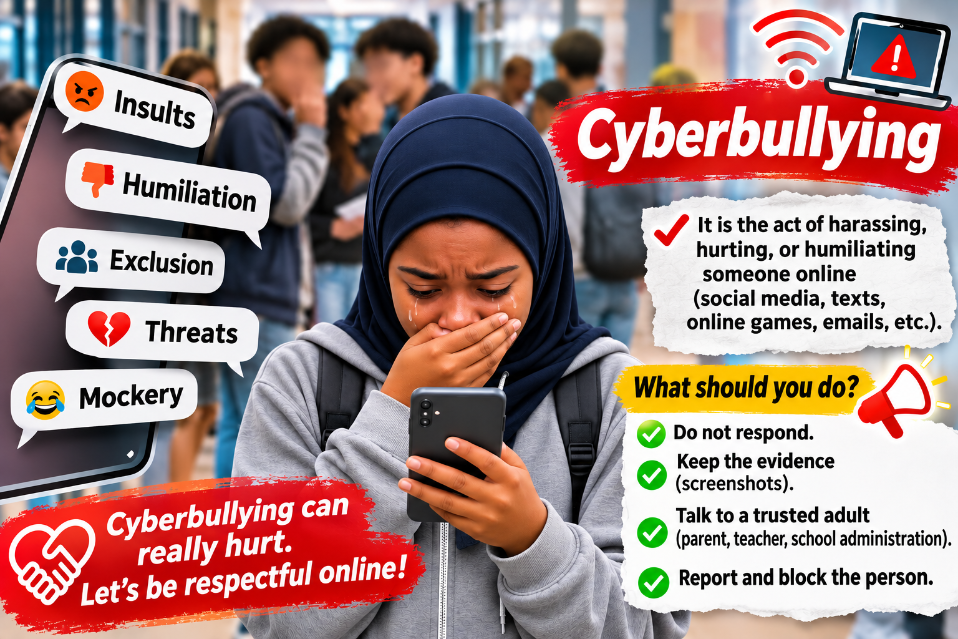
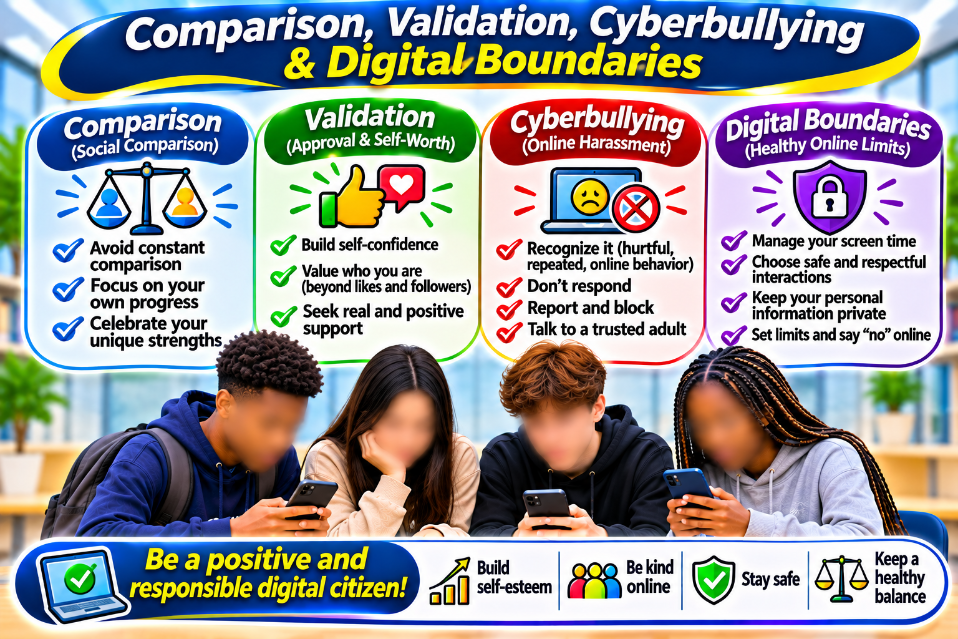
- Comparison, validation, cyberbullying, digital boundaries
- SMART goals, motivation, habits and persistence
- Trusted adults, professional support, warning signs and help-seeking
- Integration of all previous skills.
Practical activities include, but not limited to:
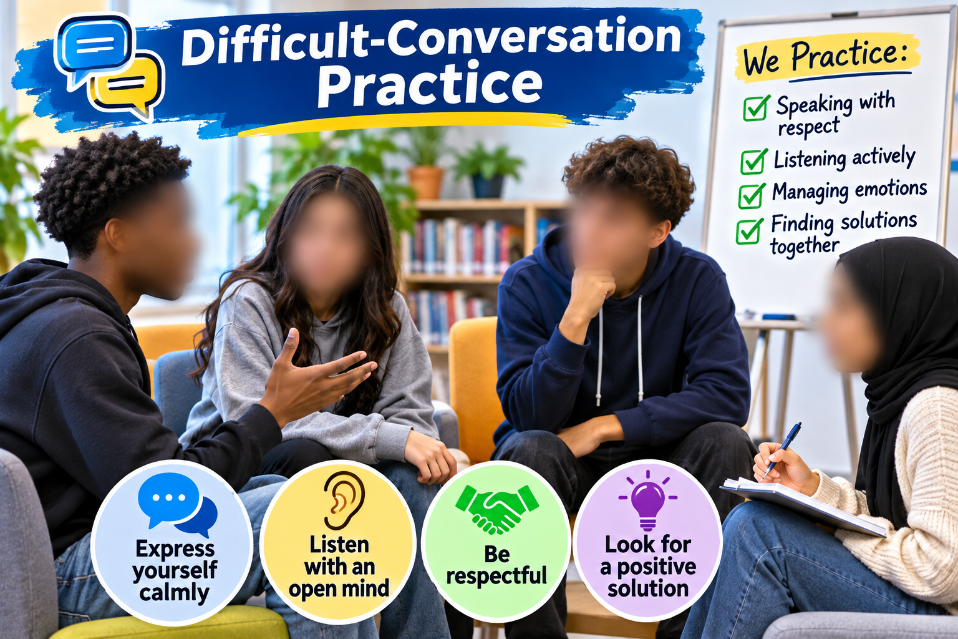
- Difficult-conversation practice
- Personal digital-wellness audit
- Create a 30-day goal
- Personal support network map
- Youth Wellness & Life Plan.
We teach students how to have difficult conversations.
Students examine how social media makes them feel / when they should disconnect / which accounts positively/negatively affect them / how much time they spend online.
They learn about SMART goals:
- Specific
- Measurable
- Achievable
- Relevant
- Time-bound.
Students learn that asking for help is a skill, not a failure. They identify their support network:
- Level 1: People I trust (parents, guardians, friends, etc.)
- Level 2: School/community support (counselor, youth worker, school support staff, etc.)
- Level 3: Professional support (physician, psychologist, psychotherapist, etc.).
They create a personal document: "My Youth Wellness & Life Plan".
We remind you that this workshop is adapted according to the level of expertise of the participants and the needs of the clients.